Multimedia Learning
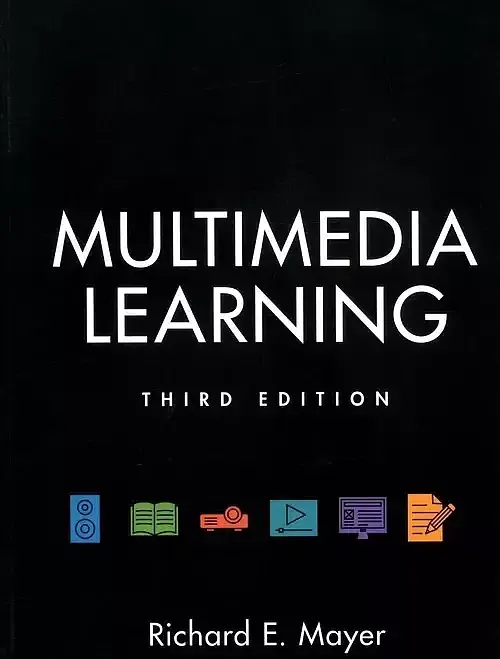
Advances in computer graphic technologies have inspired new efforts to understand the potential of multimedia instruction as a means of promoting human learning. In Multimedia Learning, Third Edition, Richard E. Mayer takes an evidence-based approach to improving education using well-designed multimedia instruction. He reviews 15 principles of multimedia instructional design that are based on more than 200 experimental research studies and grounded in a cognitive theory of how people learn from words and graphics. The result is the latest instalment of what Mayer calls the Cognitive Theory of Multimedia Learning, a theory introduced in previous editions of Multimedia Learning and in The Cambridge Handbook of Multimedia Learning, Second Edition. This edition provides an up-to-date and systematic summary of research studies on multimedia learning, supplemented with complementary evidence from around the globe. It is well-suited to graduate and undergraduate courses in psychology, education, computer science, communication, instructional design, and game design.
Examines the scientific underpinnings of multimedia learning
Well-suited to graduate and undergraduate courses in psychology, education, computer science, communication, instructional design, and game design
Provides basic theory and research on the cognitive science of how people learn from words and pictures
Gives practical evidence-based principles for how to design effective multimedia instruction
Presents a systematic summary of research studies on multimedia learning, supplemented with complementary evidence from around the globe
| Cena det. | 173,00 zł |
|---|---|
| Data wydania | 2022-01-01 |
| Rok wydania | 2022 |
| Autor | Richard E. Mayer |
| Wydawca | Cambridge University Press |
| Format | 18.5 x 24.5 cm |
| Liczba stron | 433 |
| Oprawa | Miękka |
| ISBN | 9781316638088 |
| EAN | 9781316638088 |
| Numer katalogowy | 594827 |
| Wydanie | 3 |
- Podana przy każdym produkcie „Dostępność” oznacza czas potrzebny do skompletowania zamówienia zawierającego dany produkt i wysłania go z magazynu. W tym przypadku dostępność nie oznacza więc przewidzianego dla danego sposobu wysyłki czasu dostawy, np. czasu potrzebnego kurierowi na dostarczenie paczki pod wskazany adres lub do punktu odbioru.
- Przykładowo „Dostępność: 1 dzień roboczy” oznacza, że dany produkt jest dostępny w naszym magazynie i zostanie wysłany do klienta w kolejnym dniu roboczym od daty złożenia zamówienia.
- Warto pamiętać, że zamówienie zawierające produkty z różnym czasem dostępności zostanie wysłane z magazynu w terminie najdalszym z podanych. Jeżeli zależy Państwu na szybkiej realizacji zamówienia, rekomendujemy wybór produktów z najkrótszym czasem dostępności.
Inne z tej kategorii