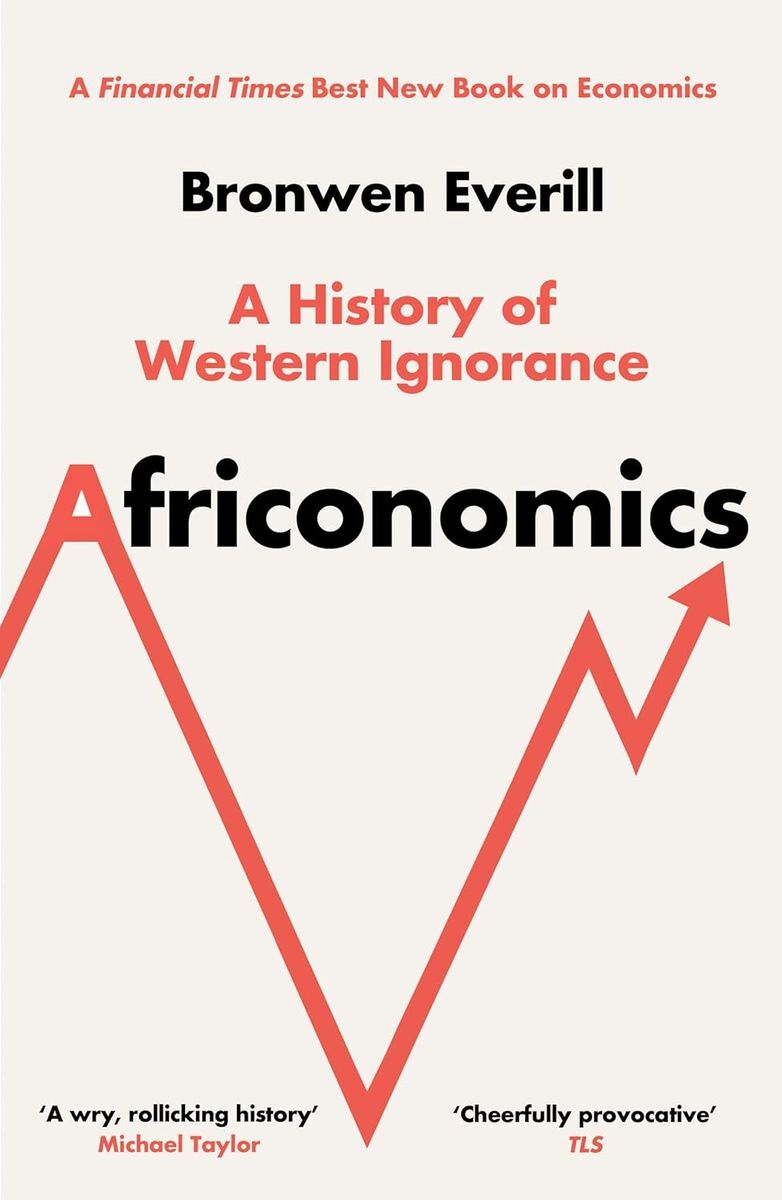
Africonomics. A History of Western Ignorance and African Economics wer. angielska
A historically insightful read'Financial Times
'A wry, rollicking, and provocative history' Michael Taylor, author of The Interest
‘A thought-provoking analysis of Africa's relationship with economic imperialism’ Astrid Madimba and Chinny Ukata, authors of It’s A Continent
We need to think differently about African economics.
For centuries, Westerners have tried to ‘fix’ African economies. From the abolition of slavery onwards, missionaries, philanthropists, development economists and NGOs have arrived on the continent, full of good intentions and bad ideas. Their experiments have invariably gone awry, to the great surprise of all involved.
In this short, bold story of Western economic thought about Africa, historian Bronwen Everill argues that these interventions fail because they start from a misguided premise: that African economies just need to be more like the West. Ignoring Africa's own traditions of economic thought, Europeans and Americans assumed a set of universal economic laws that they thought could be applied anywhere. They enforced specifically Western ideas about growth, wealth, debt, unemployment, inflation, women’s work and more, and used Western metrics to find African countries wanting.
The West does not know better than African nations how an economy should be run. By laying bare the myths and realities of our tangled economic history, Africonomics moves from Western ignorance to African knowledge.
*Shortlisted for the BCA African Business Book of the Year*
| Cena det. | 60,00 zł |
|---|---|
| Data wydania | 2025-09-04 |
| Rok wydania | 2025 |
| Autor | Bronwen Everill |
| Wydawca | Harper Collins Publishers |
| Format | 197 x 129 x 18 mm |
| Liczba stron | 304 |
| Oprawa | Miękka |
| ISBN | 9780008581183 |
| EAN | 9780008581183 |
| Numer katalogowy | 782765 |
- Podana przy każdym produkcie „Dostępność” oznacza czas potrzebny do skompletowania zamówienia zawierającego dany produkt i wysłania go z magazynu. W tym przypadku dostępność nie oznacza więc przewidzianego dla danego sposobu wysyłki czasu dostawy, np. czasu potrzebnego kurierowi na dostarczenie paczki pod wskazany adres lub do punktu odbioru.
- Przykładowo „Dostępność: 1 dzień roboczy” oznacza, że dany produkt jest dostępny w naszym magazynie i zostanie wysłany do klienta w kolejnym dniu roboczym od daty złożenia zamówienia.
- Warto pamiętać, że zamówienie zawierające produkty z różnym czasem dostępności zostanie wysłane z magazynu w terminie najdalszym z podanych. Jeżeli zależy Państwu na szybkiej realizacji zamówienia, rekomendujemy wybór produktów z najkrótszym czasem dostępności.