Practical Plant Failure Analysis: A Guide to Understanding Machinery Deterioration and Improving Equipment Reliability
Numer katalogowy
762312
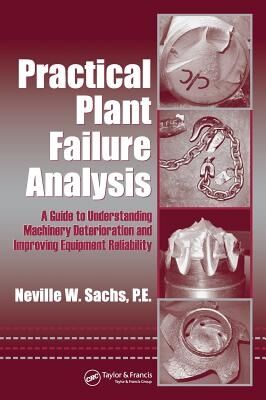
Component failures result from a combination of factors involving materials science, mechanics, thermodynamics, corrosion, and tribology. With the right guidance, you don’t have to be an authority in all of these areas to become skilled at diagnosing and preventing failures. Based on the author’s more than thirty years of experience, Practical Plant Failure Analysis: A Guide to Understanding Machinery Deterioration and Improving Equipment Reliability is a down-to-earth guide to improving machinery maintenance and reliability.
Illustrated with hundreds of diagrams and photographs, this book examines…
· When and how to conduct a physical failure analysis
· Basic material properties including heat treating mechanisms, work hardening, and the effects of temperature changes on material properties
· The differences in appearance between ductile overload, brittle overload, and fatigue failures
· High cycle fatigue and how to differentiate between high stress concentrations and high operating stresses
· Low cycle fatigue and unusual fatigue situations
· Lubrication and its influence on the three basic bearing designs
· Ball and roller bearings, gears, fasteners, V-belts, and synchronous belts
Taking a detailed and systematic approach, Practical Plant Failure Analysis thoroughly explains the four major failure mechanisms?wear, corrosion, overload, and fatigue?as well as how to identify them. The author clearly identifies how these mechanisms appear in various components and supplies convenient charts that demonstrate how to identify the specific causes of failure.
Illustrated with hundreds of diagrams and photographs, this book examines…
· When and how to conduct a physical failure analysis
· Basic material properties including heat treating mechanisms, work hardening, and the effects of temperature changes on material properties
· The differences in appearance between ductile overload, brittle overload, and fatigue failures
· High cycle fatigue and how to differentiate between high stress concentrations and high operating stresses
· Low cycle fatigue and unusual fatigue situations
· Lubrication and its influence on the three basic bearing designs
· Ball and roller bearings, gears, fasteners, V-belts, and synchronous belts
Taking a detailed and systematic approach, Practical Plant Failure Analysis thoroughly explains the four major failure mechanisms?wear, corrosion, overload, and fatigue?as well as how to identify them. The author clearly identifies how these mechanisms appear in various components and supplies convenient charts that demonstrate how to identify the specific causes of failure.
| Cena det. | 0,00 zł |
|---|---|
| Data wydania | 2012-04-04 |
| Rok wydania | 2006 |
| Autor | Neville W. Sachs |
| Wydawca | CRC PR INC |
| Liczba stron | 266 |
| ISBN | 0849333768 |
| EAN | 9780849333767 |
| Numer katalogowy | 762312 |
Dostępność
- Podana przy każdym produkcie „Dostępność” oznacza czas potrzebny do skompletowania zamówienia zawierającego dany produkt i wysłania go z magazynu. W tym przypadku dostępność nie oznacza więc przewidzianego dla danego sposobu wysyłki czasu dostawy, np. czasu potrzebnego kurierowi na dostarczenie paczki pod wskazany adres lub do punktu odbioru.
- Przykładowo „Dostępność: 1 dzień roboczy” oznacza, że dany produkt jest dostępny w naszym magazynie i zostanie wysłany do klienta w kolejnym dniu roboczym od daty złożenia zamówienia.
W przypadku produktów z dłuższym czasem dostępności oczekujemy na dostawę towaru.
- Warto pamiętać, że zamówienie zawierające produkty z różnym czasem dostępności zostanie wysłane z magazynu w terminie najdalszym z podanych. Jeżeli zależy Państwu na szybkiej realizacji zamówienia, rekomendujemy wybór produktów z najkrótszym czasem dostępności.
Przedsprzedaż
W przypadku przedsprzedaży, czyli produktów, które mają premierę w przyszłości, podana przy produkcie data wydania ma charakter orientacyjny i może jeszcze ulec zmianie. Prosimy o uwzględnienie tego przy składaniu zamówienia.