Ancient Rome in Fifty Monuments
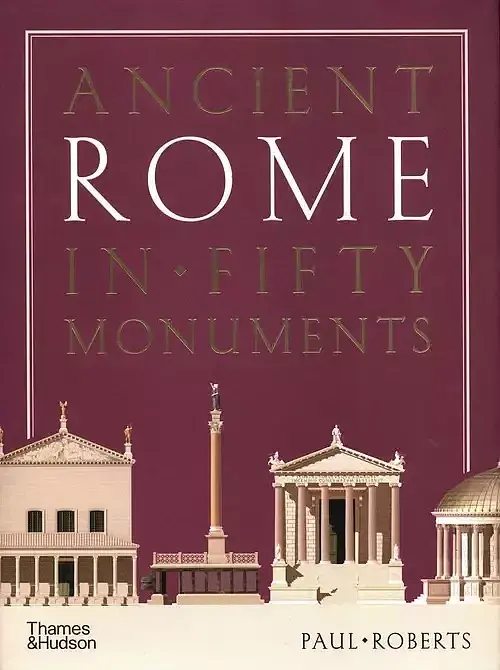
What is worse than Nero? What is better than Nero’s Baths?’ – so wrote the poet Martial in the first century AD, demonstrating the power that buildings have on public consciousness. In ancient Rome, who built a monument and why mattered as much as its physical structure. Over centuries and under many different emperors, a small village in Italy was transformed into the crowning glory of an empire. Seeking out the personalities behind the great building projects is key to understanding them.
With this firmly in mind, Paul Roberts takes the reader on a tour of ancient Rome, vividly evoking the sights and sounds of the city: from the roar of the crowds at the Circus Maximus and the Colosseum, to the dazzling gleam of the marble- and mosaic-covered baths of Caracalla and Diocletian. He tells this story emperor by emperor, drawing out the political, social and cultural backdrop to the monuments and ultimately the very human motivations that gave rise to their construction – and destruction. These fascinating buildings are further brought to life with reconstructions that show how the ancients themselves would have experienced them.
When and why were these monuments built? What did they add to the lives of the people who used them? What impact did they have on the shape of the city? Roberts expertly weaves together the latest archaeological research with social and cultural history, to tell the story of the Eternal City, always in some way rising, falling and being rebuilt.
| Cena det. | 159,00 zł |
|---|---|
| Data wydania | 2024-01-01 |
| Rok wydania | 2024 |
| Autor | Paul Roberts |
| Wydawca | Thames and Hudson |
| Format | 19.0 x 25.5 cm |
| Liczba stron | 256 |
| Oprawa | Twarda z obwolutą |
| ISBN | 9780500025680 |
| EAN | 9780500025680 |
| Numer katalogowy | 601647 |
- Podana przy każdym produkcie „Dostępność” oznacza czas potrzebny do skompletowania zamówienia zawierającego dany produkt i wysłania go z magazynu. W tym przypadku dostępność nie oznacza więc przewidzianego dla danego sposobu wysyłki czasu dostawy, np. czasu potrzebnego kurierowi na dostarczenie paczki pod wskazany adres lub do punktu odbioru.
- Przykładowo „Dostępność: 1 dzień roboczy” oznacza, że dany produkt jest dostępny w naszym magazynie i zostanie wysłany do klienta w kolejnym dniu roboczym od daty złożenia zamówienia.
- Warto pamiętać, że zamówienie zawierające produkty z różnym czasem dostępności zostanie wysłane z magazynu w terminie najdalszym z podanych. Jeżeli zależy Państwu na szybkiej realizacji zamówienia, rekomendujemy wybór produktów z najkrótszym czasem dostępności.